


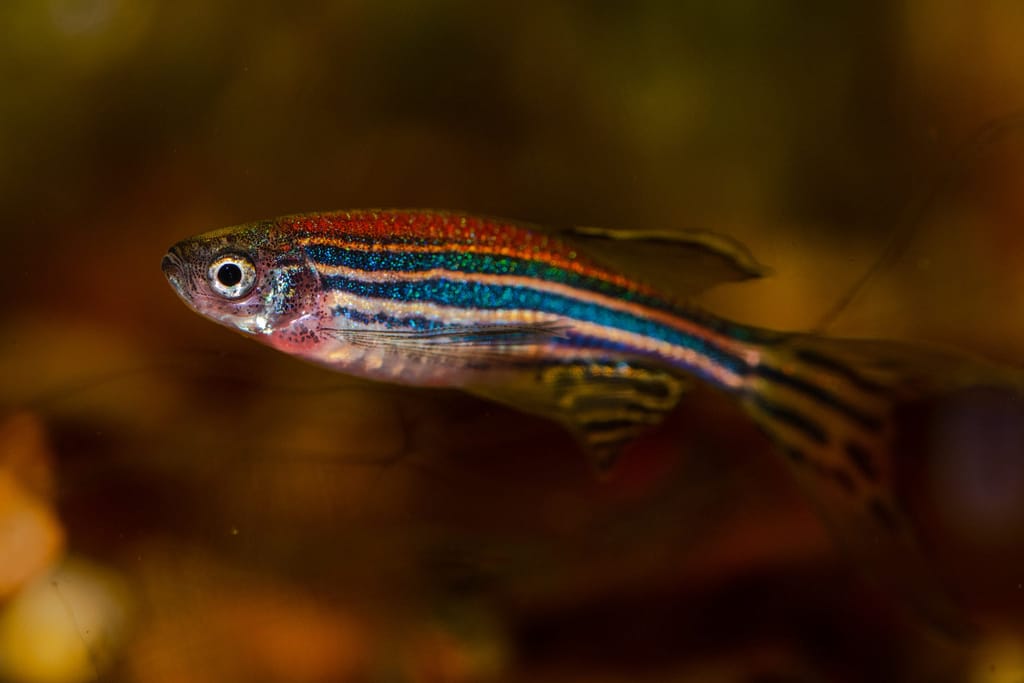
A US researcher is zeroing in on what makes zebrafish able to spontaneously regenerate injured eye tissue—specifically the RPE, a layer of cells that is the first to die in the dry form of age-related macular degeneration (AMD).
AMD is a leading cause of vision loss worldwide, and it typically strikes after age 50. The disease destroys light-sensing cells in the centre of the retina that gives us the ability to recognize faces, read, and see fine detail.
Current treatments for AMD can only slow the progression of the disease. They can’t reverse it by regrowing replacements for cells that have died.
Dr. Lyndsay Leach has devised an elegant, ingenious way to wipe out only the RPE cells in zebrafish, without harming any other part of the eye. This has allowed her to shed light on what makes zebrafish able to regrow the RPE. One key finding: the zebrafish’s immune system reacts less aggressively to damage than the human immune system does.
Dr. Leach believes that uncovering the steps in the zebrafish’s regeneration process and eventually comparing it to what happens when human RPE cells sustain damage could lead to new treatments for dry AMD.
I wrote about Dr. Leach’s work for the BrightFocus Foundation, which is funding this project. You can read the story here.
Image by Petr Kuznetsov Courtesy of Pixabay